Fargo ND Pole Barn Site Prep & Grading | Raised, Compacted & Drained Building Pads
Building pad construction, grading and drainage across the Red River Valley, where nothing drains unless somebody makes it. This is the flattest farmland in North America, which means surface water goes exactly where you put it, or it sits against your building. Fargo ND Pole Barn Builders serves Cass County, North Dakota and Clay County, Minnesota.
Get a quote on your building
Tell us the size, the use and where the site is. We will come back with a scope and a price, not a brochure.
Fargo ND Pole Barn Site Prep & Grading
On ground this flat, water goes where you put it
The Red River Valley is the flattest agricultural land in North America, and the Red River itself flows north, which means it thaws at the mouth last. The practical consequence on any given site is that spring meltwater has nowhere obvious to go, and it sits.
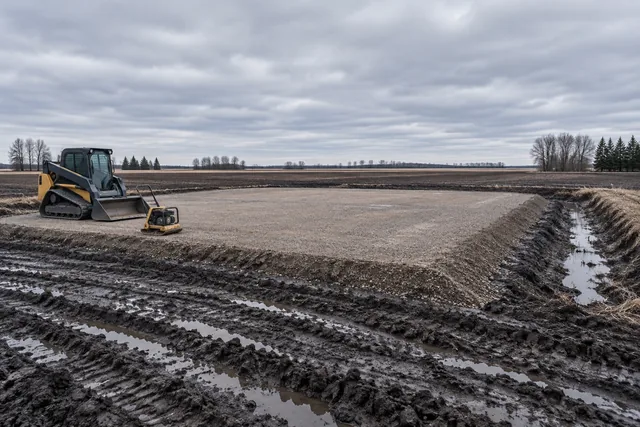
Every building we put up here is raised above the surrounding grade for that reason. Not by much, but deliberately, with a route for water to leave. A building set at existing grade on this clay will have water standing against it every April.
- Pad raised above surrounding grade
Enough that meltwater flows away from the building rather than towards it.
- Fill placed and compacted in lifts
Granular material in controlled layers, compacted as it goes. Dumped fill settles unevenly.
- Drainage route established
Where water leaves, all the way to somewhere it can actually go, not just to the edge of the pad.
- Topsoil stripped before filling
Building a pad on top of organic topsoil guarantees settlement as the organics break down.
Why we will not build on a pad we did not see go in
Where a customer has had a pad built by someone else, we will look at it and we may ask to dig a test hole. That is not a comment on the other contractor. It is because everything we build sits on that pad and we cannot see what is under it once it is finished. If it turns out to be topsoil under six inches of gravel, that is far better discovered before the building goes up.
How we build it, and how it usually gets built
How it usually gets built
Scrape the grass off, level it roughly with a blade and start augering the same afternoon.
How we build it
Strip the topsoil, prepare the subgrade, place granular fill in compacted lifts and establish where the water leaves before anything is built.
Site preparation sequence
- Step 01Survey and assess
Existing levels, drainage patterns, access and any constraints recorded before machinery arrives.
- Step 02Strip and prepare
Topsoil removed and stockpiled, subgrade exposed, inspected and any soft areas remediated.
- Step 03Fill and compact
Granular material placed in lifts and compacted to build the pad above surrounding grade.
- Step 04Grade and drain
Final levels set, swales or drainage routes cut, and the surface graded to fall away from the building.
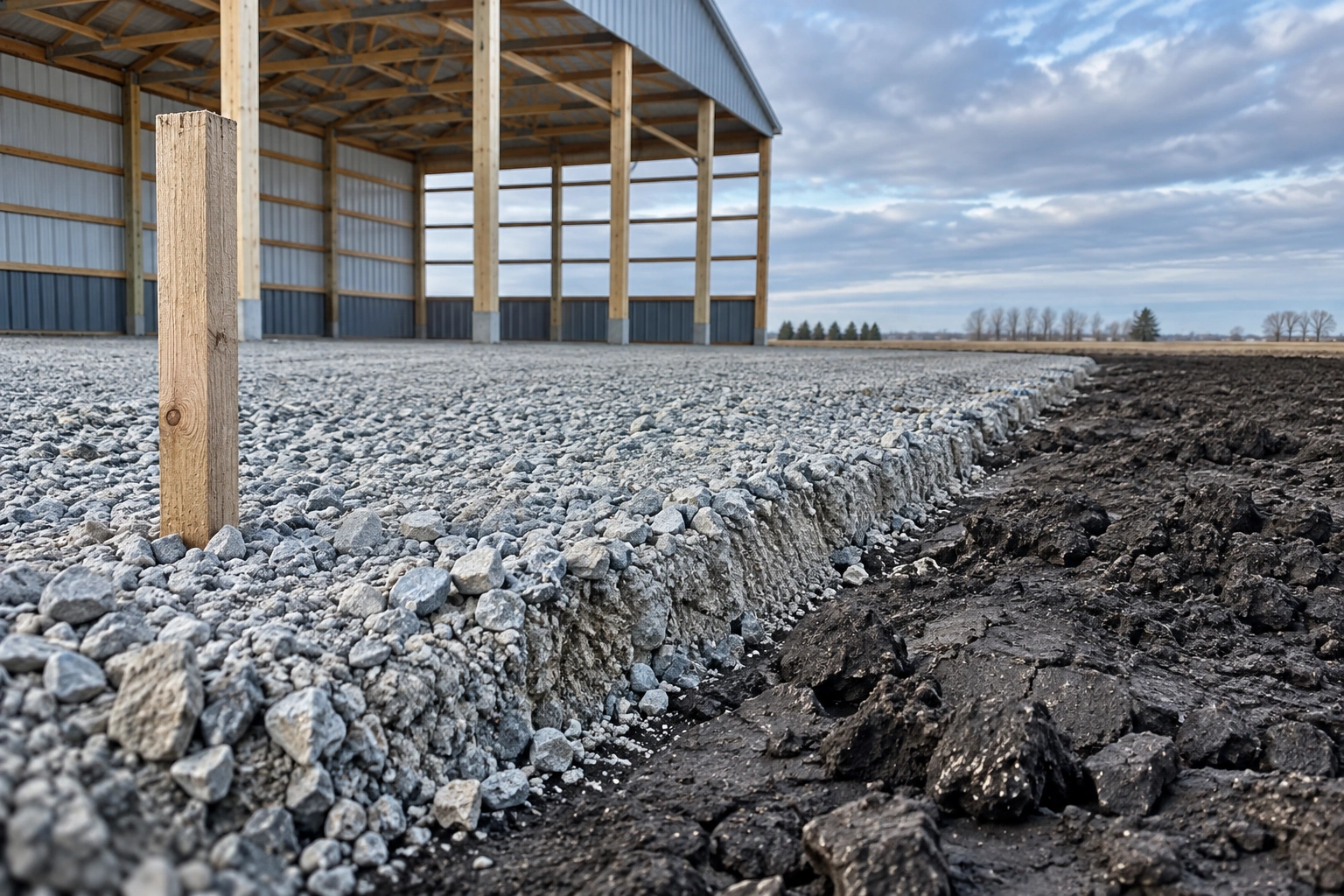
Fargo silty clay loam is a difficult material to build on and an excellent material to farm. It holds water, it swells when wet and shrinks when dry, and it has low bearing capacity when saturated. It is also nearly impermeable, which is why surface water sits rather than soaking away.
The answer is not to fight it. A granular pad placed over stripped and prepared subgrade gives you a stable, free-draining working platform and breaks the capillary connection between the clay and whatever you build on top.
Four site issues specific to this valley
They come up on almost every rural job here.
- Spring saturation
Between thaw and the ground drying out, this clay will not carry a loaded truck. It is the main reason building programmes in the valley slip, and it has nothing to do with temperature.
- Field tile
Established farmland frequently has drainage tile in it, and it is rarely mapped. Cutting a tile line during excavation creates a problem for you and potentially for your neighbour.
- Existing yard drainage patterns
Every farmstead has developed a drainage pattern over decades. A new building pad in the wrong place redirects that water, sometimes into a building that was previously dry.
- Floodplain and watercourse setbacks
Cass County Planning handles floodplain administration for jurisdictions outside the NFIP, and township ordinances set watercourse setbacks. Both bite before you build, not after.
Site preparation specification
What proper pad construction involves.
Topsoil removed
Organic material stripped from the building footprint and a margin around it, because organics decompose and settle.
Prepared and proof rolled
Exposed subgrade inspected and any soft areas dealt with before fill is placed.
Granular, in lifts
Placed in controlled layers and compacted as it goes, to a height that lifts the building clear of surrounding grade.
Swale or route out
A defined path for surface water away from the building, graded to somewhere it can actually go.
Site work cost
Site preparation is the most variable line in any post-frame quote, because it depends entirely on what is under the grass and how far the nearest suitable fill is. Two identical buildings a mile apart can differ substantially on this line alone.
It is also the line where cutting corners does the most damage, because everything else sits on it. If the budget has to give somewhere, it should not give here.
What goes wrong, and what we do instead
| What goes wrong | What it causes | What we do instead |
|---|---|---|
| Pad built on unstripped topsoil | Organics decompose and the pad settles unevenly, taking the slab and sometimes the footings with it. | Topsoil stripped from the footprint and a margin beyond before any fill is placed. |
| Fill dumped and levelled rather than placed in lifts | Uneven compaction and differential settlement across the building footprint. | Granular fill placed in controlled lifts and compacted at each layer. |
| Building set at existing grade | Meltwater ponds against the walls every spring and eventually finds its way inside. | Pad raised above surrounding grade with a positive fall and a defined route for water to leave. |
Before site work starts
Four things to sort out first.
- Locates
811 called and marks placed. In a farm yard there are usually more buried services than anyone remembers.
- Field tile information
Anything you know about tile runs on the property, including from previous owners. It is rarely documented anywhere else.
- Where water currently goes
You have watched this site for years. That knowledge is more valuable than any survey we can do in a morning.
- Access route for trucks
Fill and concrete both arrive on heavy trucks. The route in has to carry them, particularly in spring.
Common questions
How high should a building pad be?
Enough that water flows away from the building rather than towards it, which on ground this flat usually means somewhere between six and twelve inches above surrounding grade, combined with a defined route for the water to leave. The exact figure comes from the site levels.
Can you build on my existing gravel pad?
Probably, but we will want to look at it and possibly dig a test hole first. The concern is what is under the gravel. A pad built over unstripped topsoil will settle regardless of how good the gravel layer looks.
What happens if you hit field tile?
We stop, assess and repair or reroute it properly. Cutting a tile line and burying it is a genuine problem, both for your drainage and potentially for a neighbour's. Anything you know about tile on the property before we start is valuable.
When is the best time of year for site work?
Late summer and autumn, generally. The ground is dry, it carries machinery, and there is time to let a pad settle before building. Spring is the worst window in this valley, not because of cold but because saturated clay will not carry a truck.
Do I need a permit for grading?
In rural Clay County, a Land Alteration Permit is required for moving more than 50 cubic yards outside of steep slopes and shore-impact zones, and for much smaller volumes within them. In North Dakota it depends on the jurisdiction and whether floodplain or watercourse setbacks are involved. We check before we move material.
Is site work included in a building quote?
We quote it as a separate line, always, because it is the most variable part of the job and you should be able to see it clearly.
Do I need to be there for the site walk?
For the site walk, yes. You know where the water goes in spring and where the ground stays soft, and that is information we cannot get any other way.
Can I do the site work myself?
Plenty of customers do, particularly those who already own the machinery. What we will do before building on it is look at the pad and, where it matters, dig a test hole, because everything we put up sits on it and we cannot see what is underneath once it is finished. That is not a comment on your work; we do the same with pads built by other contractors.
Do I need a permit just to build the pad?
In rural Clay County, quite possibly. A Land Alteration Permit is required for moving more than 50 cubic yards of material outside steep slopes and shore and bluff impacted zones, more than 10 cubic yards within them, or for grading or filling type 2 to 8 wetlands. A raised pad on a flat site reaches 50 cubic yards easily, so we check before machinery moves.
Other things we build
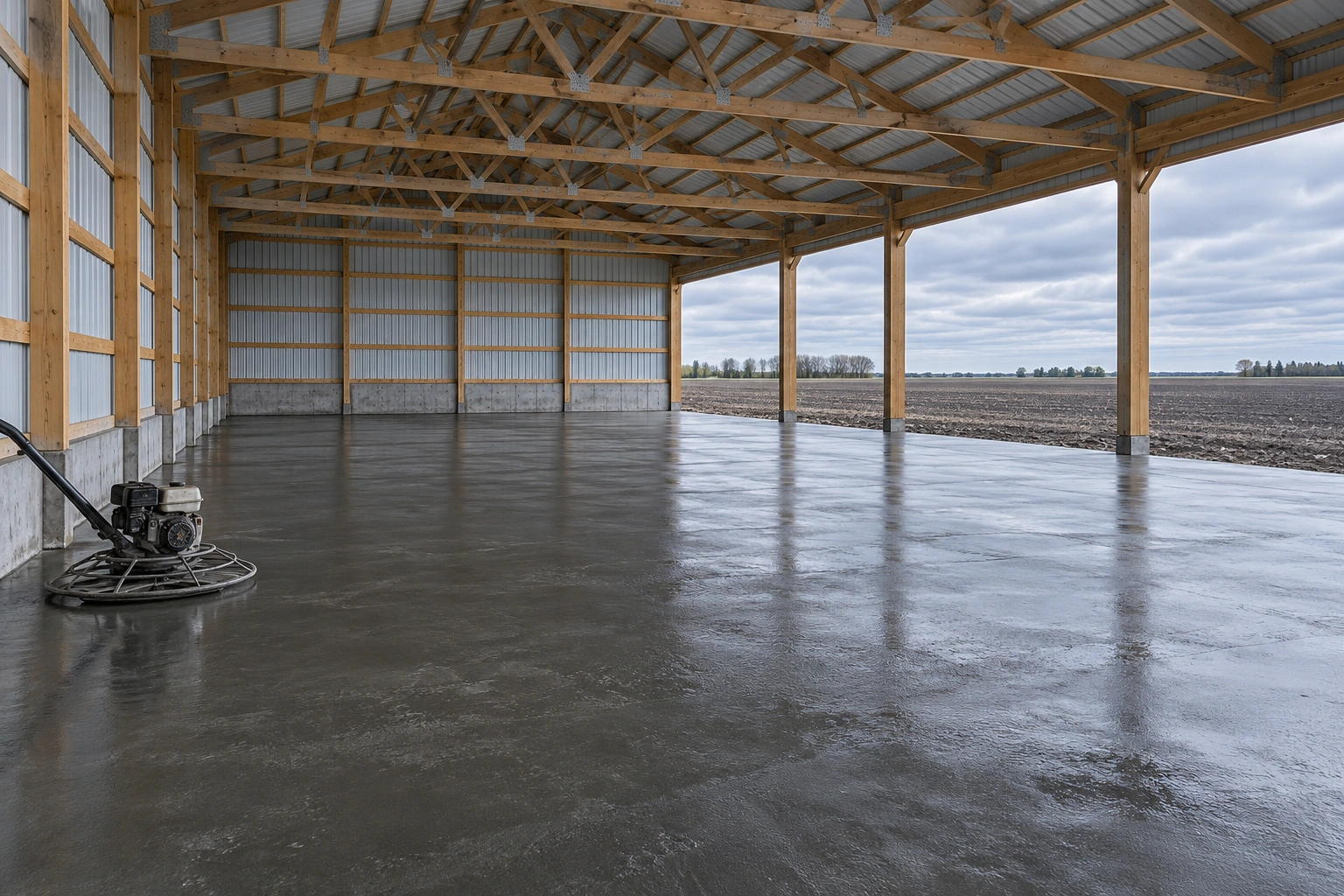 Pole Barn Foundation & Concrete WorkFootings below frost, slabs that stay flat, and concrete poured in weather that suits it.
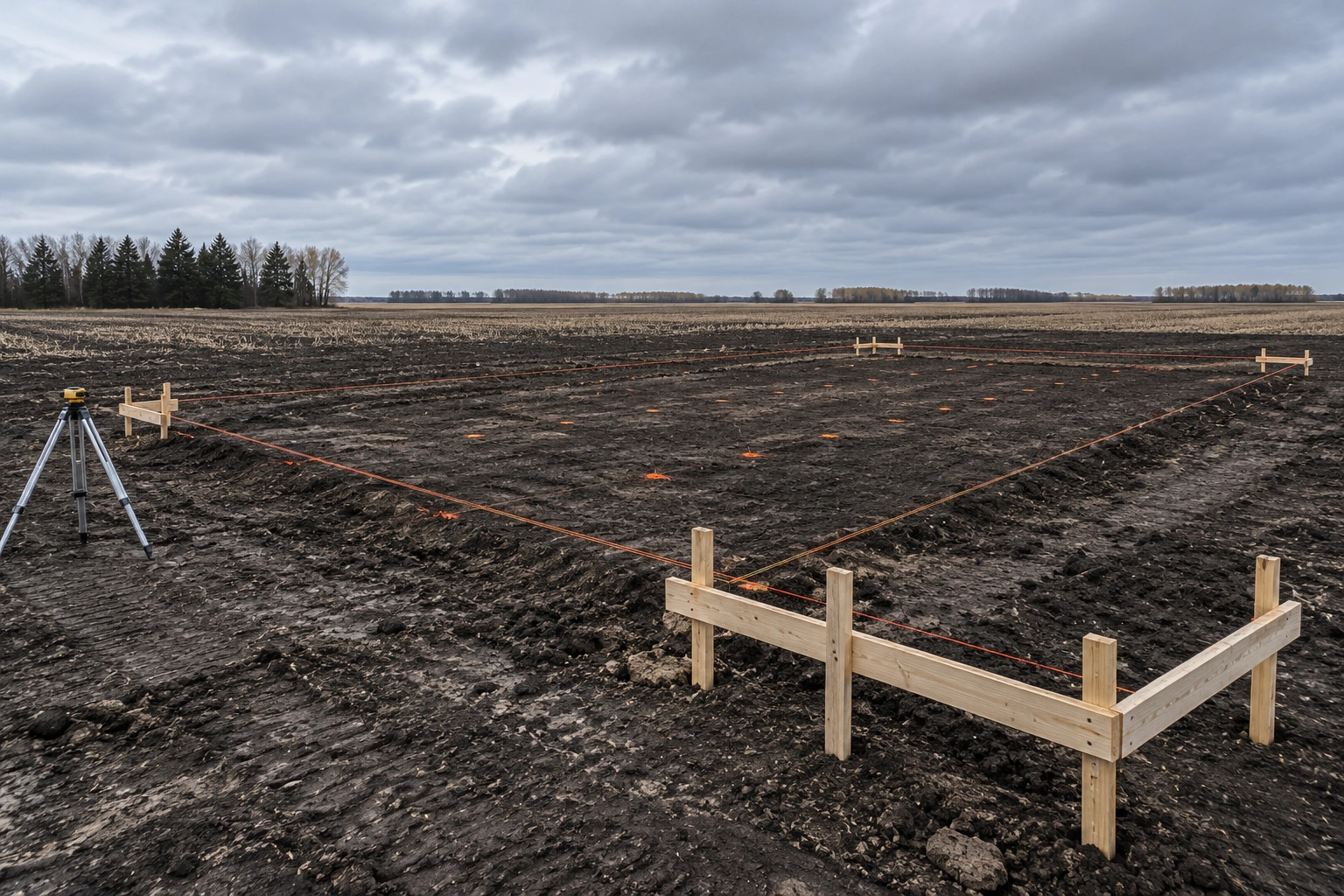 Pole Barn Design & PlanningLayout, engineering and permitting worked out before anyone orders material.
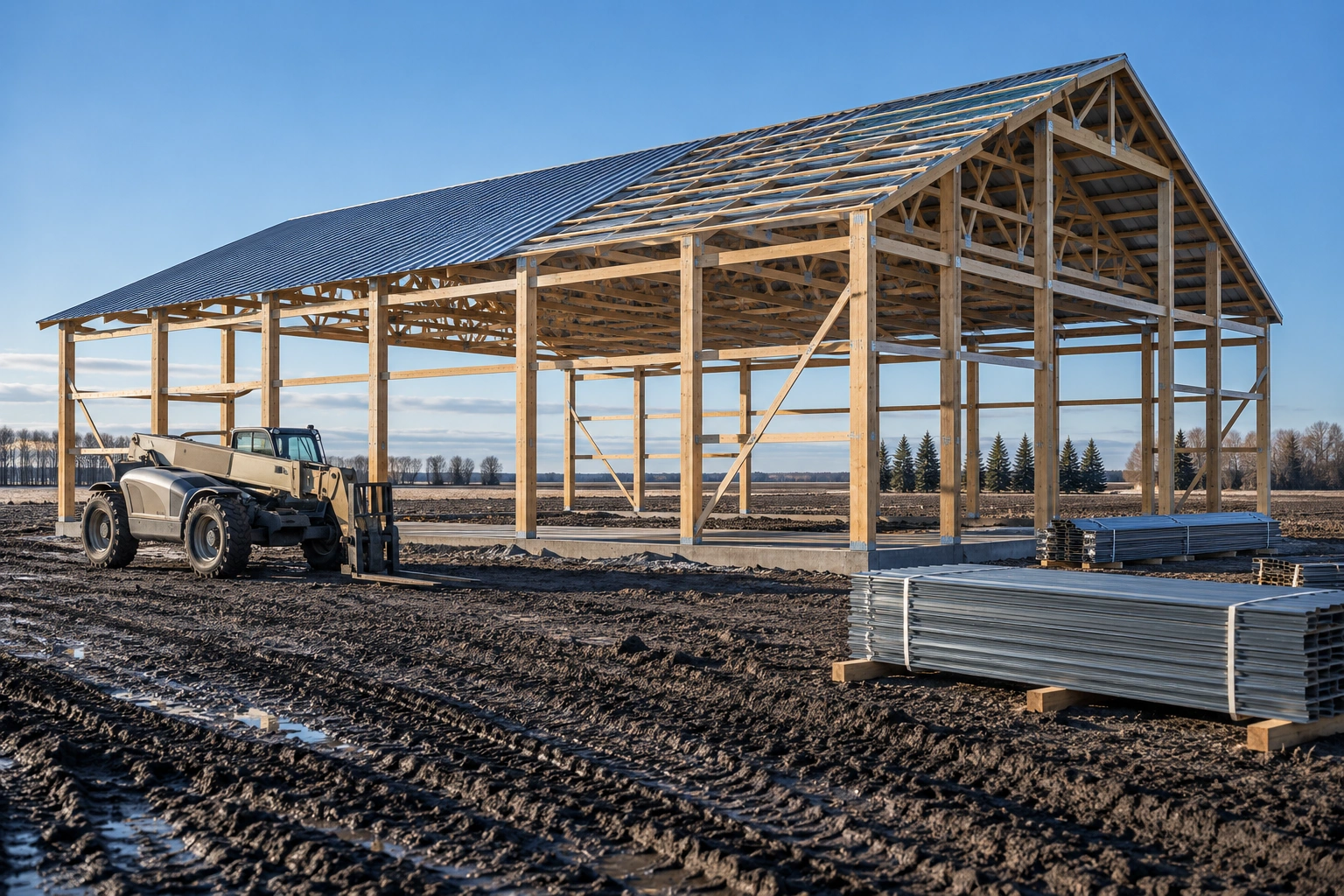 Pole Barn ConstructionStart to finish post-frame building, from the first hole to the final trim screw.
Start with the ground
Tell us where the building would go and what the site does in spring. We will walk it and price the pad properly.