Fargo ND Pole Barn Repair | Post Rot, Roof Sag & Storm Damage
Repair and structural correction on older post-frame buildings across Cass and Clay counties, with an honest assessment of whether it is worth doing. Most buildings from the sixties and seventies are worth saving. Some are not, and we will tell you which one you have before you spend anything. Fargo ND Pole Barn Builders covers both sides of the Red River, in Cass and Clay counties.
Get a quote on your building
Tell us the size, the use and where the site is. We will come back with a scope and a price, not a brochure.
Fargo ND Pole Barn Repair
Most old buildings are worth saving. Some are not.
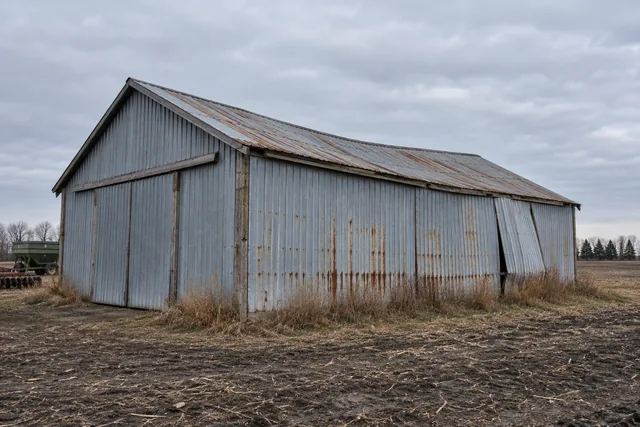
There are a lot of pole barns in this valley built in the sixties and seventies, and a great many of them are still perfectly serviceable. The ones that are not usually have one of three problems: rot at the column bases, a roof that has taken more snow than it was designed for, or cladding and fasteners that have simply reached the end of their life.
The first thing we do is work out which of those you have, and whether fixing it makes economic sense. Sometimes it does not, and we will say so.
- Column bases probed, not eyeballed
Rot starts at the air-soil interface and is often invisible from above. It gets probed and, where necessary, excavated.
- Ridge and purlin lines checked for deflection
Sag is measurable. We take it rather than describing it as 'a bit uneven'.
- Fastener and washer condition assessed
On a forty-year-old roof, the washers are frequently the reason it leaks, not the panel.
- An honest verdict
If the sensible answer is a new building, that is what we will tell you.
Four signs an old pole barn needs attention
If you recognise two or more of these, it is worth a look.
- Doors that have started to bind
Almost always a structural symptom rather than a door problem. Something has moved: a column has settled, heaved, or the frame has racked.
- A ridge line that is no longer straight
Sight along it from the gable end. A visible dip means trusses or purlins have deflected and it will not recover on its own.
- Rust weeping from fastener heads
The washers have failed and water is sitting around each screw. Left long enough it becomes a purlin problem rather than a roof problem.
- Soft or spongy timber at the column base
Probe it with a screwdriver. If it sinks in easily, the column has lost section where it matters most.
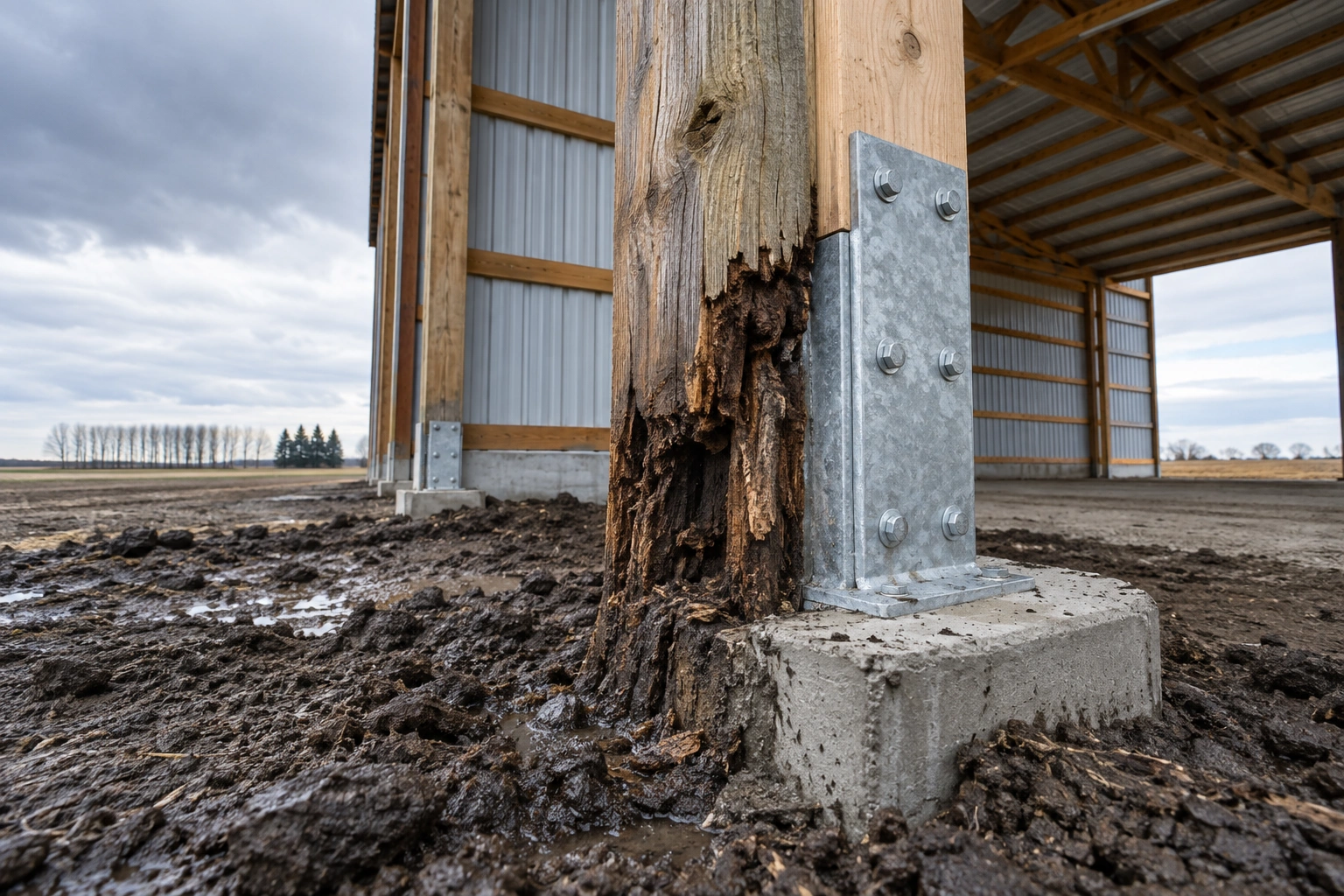
Column base rot is the classic failure on older post-frame buildings, and it happens at grade level rather than deep in the ground. That is where oxygen, moisture and timber coexist, and it is why a column can be sound at four feet down and gone to fibre at the surface.
The repair is well established. The building is supported, the rotted section is cut out, and a precast concrete base or a steel bracket assembly is installed to carry the load from below grade up to sound timber. Done properly it is a permanent fix, not a patch.
How we build it, and how it usually gets built
How it usually gets built
Bolt a new post alongside the rotted one, backfill, and hope it takes enough of the load.
How we build it
Support the structure, remove the failed section entirely, and install an engineered bracket or precast base that carries the full column load.
Repair specification
The repairs we carry out most often.
Precast or bracket
Building supported, failed section removed, precast concrete base or steel bracket assembly installed to sound timber.
Sistered or reinforced
Deflected or cracked members sistered, reinforced with steel plate, or replaced, with the cause addressed as well as the symptom.
Full or sectional
Stripped in sections where the panel is contributing to stability, with purlins and girts inspected and repaired first.
Assessed and documented
Damage recorded properly for insurance purposes before any repair work begins.
How repair work runs
- Step 01Assessment
Structure inspected, column bases probed, deflection measured, and the cause of the problem identified rather than guessed.
- Step 02Report and options
What is wrong, what it will take to fix, and whether that is the sensible course of action.
- Step 03Temporary support
Where structural work is needed, the building is supported properly before anything is removed.
- Step 04Repair and reinstate
Failed elements replaced or reinforced, then cladding, trims and doors made good.
What goes wrong, and what we do instead
| What goes wrong | What it causes | What we do instead |
|---|---|---|
| A new post bolted beside a rotted one without removing the failed section | Load sharing is unpredictable, the rot continues, and the original column keeps losing section. | Failed material removed entirely and an engineered base installed to carry the full design load. |
| Roof stripped in one go on a building with questionable framing | The roof diaphragm is removed and the frame loses its lateral stability all at once. | Frame assessed first, then stripped and re-clad in sections with temporary bracing as required. |
| Sagging truss jacked back up quickly | Rapid jacking on old timber splits chords and breaks connections that were holding. | Slow, staged jacking with connections checked at each stage, or reinforcement rather than correction where the timber cannot take it. |
Repair against replacement
The honest arithmetic usually works like this. Column base repairs and a re-roof on a sound frame are almost always worth doing, because the structure that remains is the expensive part and it is fine. Replacing the cladding, roof, doors and multiple structural members at once starts to approach new build cost without giving you a new building.
We would rather tell you that at the assessment stage than take the money and leave you with a repaired building you never really wanted.
Snow load is often the underlying cause
A great many of the sagging roofs we look at were built before current load requirements, or were built to an agricultural standard for a use that has since changed. If the roof has deflected under snow, correcting the deflection without addressing the capacity means it will happen again. That is usually a reinforcement job rather than a repair job, and it is worth doing properly once.
Before we assess
Four things that help us give you a straight answer.
- Anything you know about its age and history
When it was built, what has been done to it and whether it has ever been modified or extended.
- Clear access around the perimeter
Column bases cannot be assessed through a stack of pallets and twenty years of accumulated material.
- Your insurance position if there is storm damage
Whether a claim is being made changes how the assessment is documented.
- An honest view of what you want from the building
Repairing a building to last another five years is a different job from restoring it for another thirty.
Common questions
Is my old pole barn worth repairing?
It depends on what has failed. If the frame is sound and the problems are column bases, cladding and fasteners, repair is almost always the sensible option. If multiple trusses have deflected and the frame is out of square, the arithmetic changes and we will tell you honestly where it lands.
How do I know if the posts are rotting?
Probe the timber at ground level with a screwdriver. If it goes in easily, the column has lost section. Other signs are doors that have started to bind, a wall that is no longer plumb, and visible movement at the base when the wind blows hard.
Can a sagging roof be fixed?
Usually yes, either by correcting the deflection and reinforcing, or by reinforcing in place if the timber will not take being jacked. The important part is establishing why it sagged, because if it was snow load then the capacity needs addressing too.
Do you do storm damage repairs?
Yes. We will assess and document the damage properly, which matters if you are claiming. We would rather do that before starting work than have the evidence disappear under a repair.
Can you repair a building someone else built?
Yes, and most of what we repair was built by someone else decades ago. We are not interested in criticising previous work, only in working out what it needs now.
Do you charge for an assessment?
No. The assessment and the quote are free, and that includes telling you if we think the building is not worth the money.
Do I need to be there for the assessment?
It helps, because you know the history of the building and what it has been through. If you cannot be there, clear access and a phone call afterwards works fine.
Can you repair a building while we keep using it?
Usually, with planning. Column base repairs are done a few at a time with temporary support, which is disruptive in one bay rather than across the whole building. Re-roofing is harder to work around and is generally better done with the building cleared. We would rather agree the sequence with you up front than discover halfway through that we have blocked the only access you needed.
Do repairs need a permit?
Ordinary maintenance usually does not. Structural repair usually does, and column base replacement, truss reinforcement and purlin replacement are all structural. Township ordinances in Cass County commonly list structural alteration alongside new construction. We establish the position before starting, because a structural repair carried out without one is awkward to explain to an insurer.
Other things we build
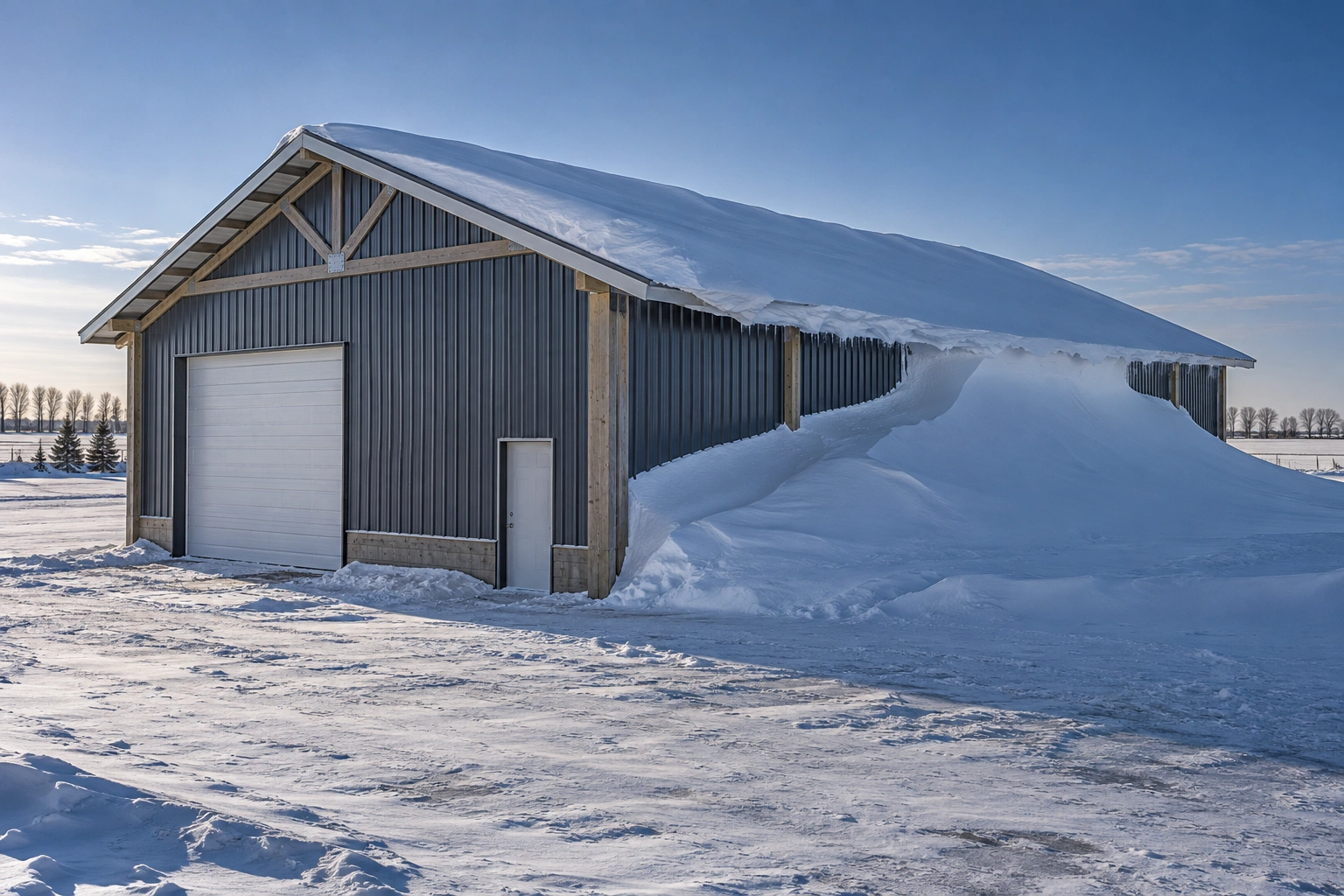 Pole Barn Snow Load ReinforcementStructural upgrades for older buildings that are carrying more snow than they were designed for.
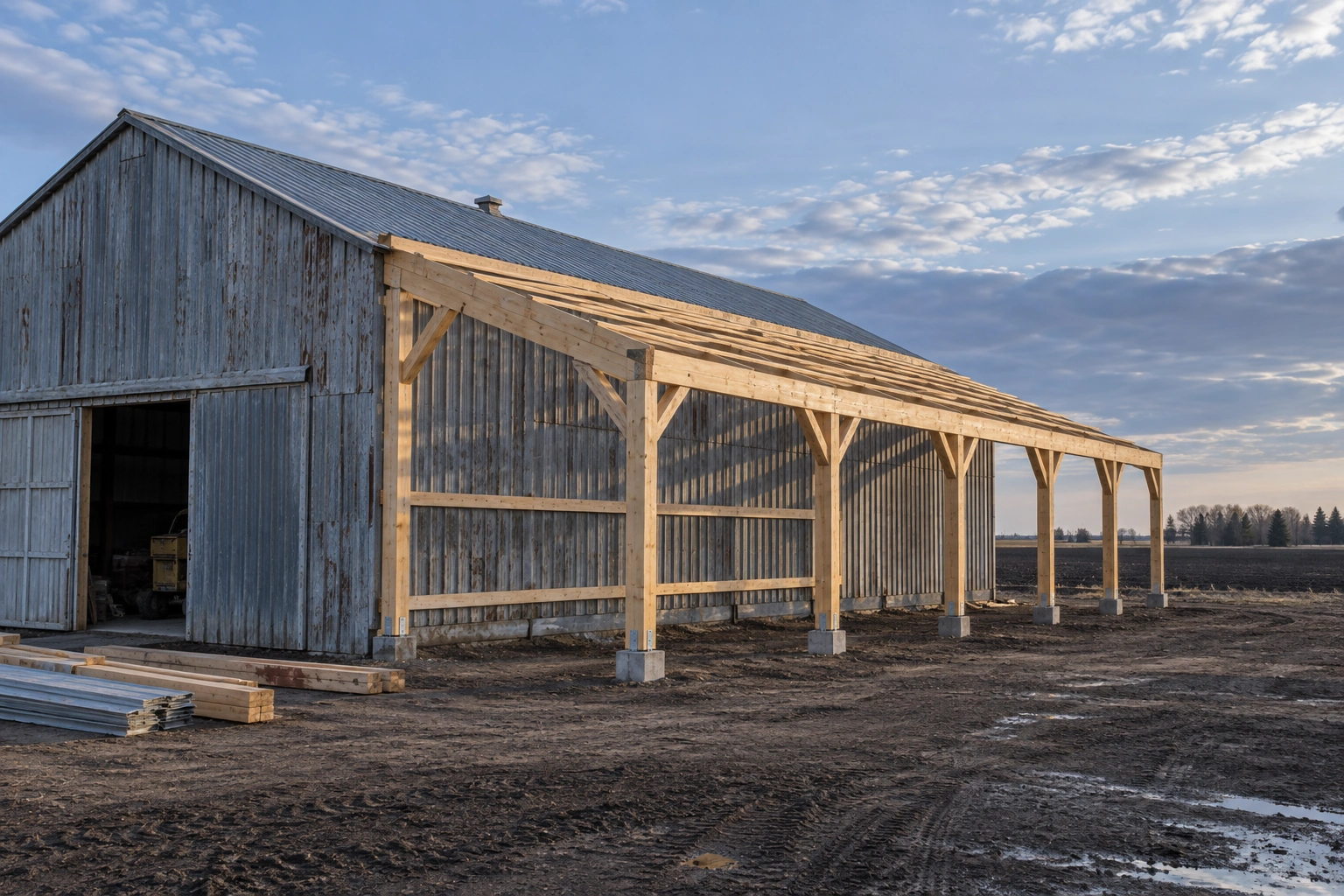 Pole Barn Renovation & AdditionsLean-tos, extensions and conversions on buildings that were never designed for them.
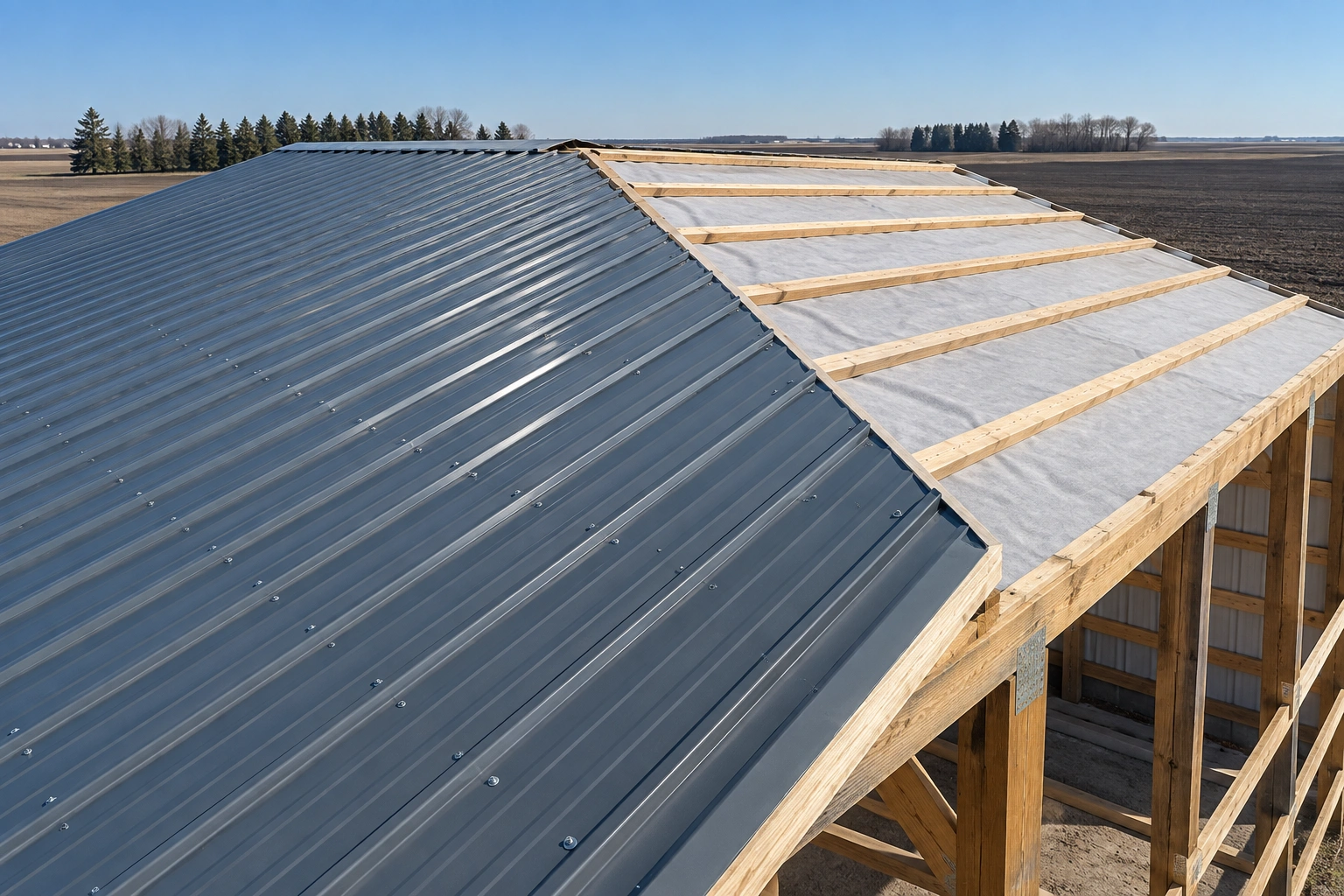 Pole Barn Roofing InstallationSteel roofing fastened to a pattern, flashed at the details, and vented so it does not sweat.
Get a straight assessment
Tell us what the building is doing and roughly how old it is. We will come and look, and tell you honestly whether it is worth repairing.